Shopify vs a custom ecommerce website in 2026: cost, control, AI-channel readiness and when to go headless
Shopify vs custom ecommerce website: cost, control, checkout, AI-channel readiness and headless Next.js, plus what a website costs, with published prices.
By Rokibul Hasan8 min read
- Shopify
- Web development

If you are about to build an online shop, or you already run one on Shopify and feel boxed in, the question is the same: Shopify vs custom ecommerce website, which one fits your business? Agencies tend to recommend whatever they build. I build custom web apps and Shopify apps, so I have less reason to push you either way.
This guide compares the two on cost, control, checkout, speed, apps and, new in 2026, how your products reach AI shopping assistants. It also covers the middle path, a custom Next.js front end on Shopify's back end, and the broader question of how much a website costs, with my own published starting prices.
Shopify vs custom ecommerce website: the short answer
For most businesses selling physical products, Shopify wins. You get a checkout, payments, inventory, order admin, tax settings and a large app store on day one, and you can be selling long before a custom build would be ready.
Custom makes sense when the way you sell does not fit a product, cart and checkout model, or when the shop is one feature inside a bigger product.
| Your situation | Usually the better fit |
|---|---|
| Physical products, a normal cart and checkout | Shopify with a theme |
| Standard selling, but a front end no theme can deliver | Headless: a Next.js front end on Shopify |
| The shop is one part of a web app with accounts, dashboards or bookings | Custom, with a proven payment provider behind it |
| Many sellers, quote-based pricing or rules no app covers | Custom, after checking Shopify apps first |
Cost: what you pay for on each side
On Shopify you pay a monthly plan, payment processing on each sale, an extra transaction fee if you use a third-party payment provider instead of Shopify Payments (it falls on higher plans, per Shopify's pricing page), and subscriptions for the apps you add. Developer time goes on theme changes and the occasional custom app.
On a custom site most of the money moves up front. You pay for the build, then hosting, a payment provider's fees, and maintenance: security updates, dependency upgrades and fixes. Everything Shopify did quietly, from tax settings and inventory to refunds, order emails and an admin for your staff, is now code someone has to write and keep working.
That is the real custom ecommerce platform cost. The launch is rarely the expensive part; year two is, when you want a new payment method, a new shipping rule or a marketplace connection, and each one is a project instead of a setting or an app.
Control, apps and data
Shopify is rented. You can export products, customers and orders, but you work inside Shopify's rules: its checkout, its URL structure, its app requirements and a new API version every quarter. For most stores that is a fair trade, because the rules come with a platform someone else maintains.
Custom gives you full control of the data model, the pages and the logic. If your product needs a configurator, per-customer pricing or a flow that runs through accounts and bookings, custom is not overkill; it is the clean way to build it. The price is that every integration, from shipping rates and tax to reviews, email and marketplaces, is yours to choose, connect and maintain.
On Shopify, a missing feature is usually an app, and when no app fits, a custom app. That is often far cheaper than leaving the platform. I break down what a custom Shopify app costs separately.
Checkout and payments
Checkout is the part I would least like a client to build from scratch. Shopify's checkout is hosted and maintained by Shopify, including Shop Pay, its own accelerated checkout.
The limits are about customisation. Checkout rules such as discounts, delivery and payment options run on Shopify Functions, and a store's own custom app can only use Functions on Plus. Adding your own interface to the information, shipping and payment steps through checkout UI extensions is Plus-only too.
On a custom site you integrate a payment provider, ideally with hosted payment fields so card numbers never touch your server. You also own everything around the payment: tax, fraud checks, failed payments, receipts and refunds. All buildable, and all ongoing work.
Speed: to launch, and on the page
To launch, Shopify is faster for a standard store: pick a theme, load products, connect payments. A custom store needs its cart, checkout, admin and emails built before the first sale.
On the page, it depends on who builds it. A lean Shopify theme can be quick, and every app that injects scripts slows it down. A custom or headless front end in Next.js can serve pages as static HTML and feel instant, but only if it is built with speed in mind. Custom is not fast by default.
Selling through AI channels: Agentic Storefronts or your own feeds
This is the new argument in 2026. Shopify and Google announced the Universal Commerce Protocol on 11 January 2026, and Shopify's Agentic Storefronts put merchants' products into ChatGPT, Microsoft Copilot, Google AI Mode and Gemini through Shopify Catalog. For eligible stores it is active by default, and you choose which AI channels to sell on under Sales channels, then Agentic. In ChatGPT, the customer buys through your own store's checkout in an in-app browser.
A custom site has to do this work itself: applying to OpenAI's merchant programme with a product feed, keeping a Google Merchant Center feed accurate, and keeping attributes, prices and stock current in every feed. There is a middle option. In the same January announcement, Shopify opened Shopify Catalog to brands that do not use Shopify for their online store, through its Agentic plan.
These channels are changing fast. Whatever you choose, clean product data and accurate stock are the parts that last. I go further in agentic commerce for online stores.
Headless Shopify: a Next.js front end on Shopify's back end
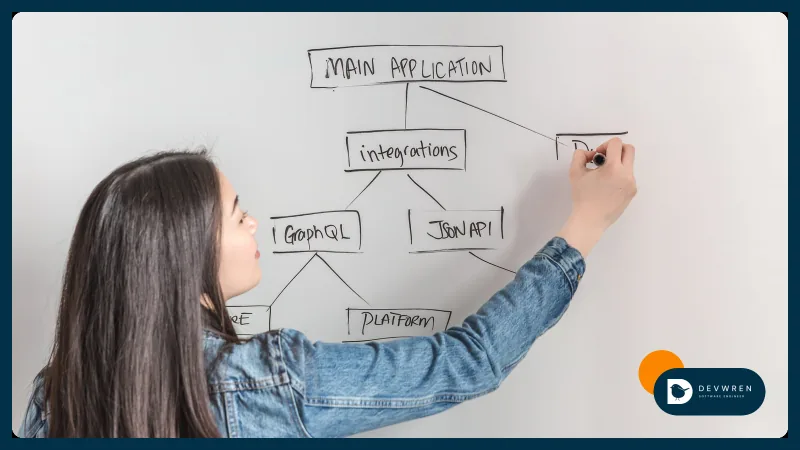
Headless means splitting the shop in two. Shopify stays the back end: products, inventory, orders, checkout, payments, staff admin and apps. The front end, the pages customers see, is built separately and talks to Shopify through the Storefront API, then hands the customer to Shopify's checkout. Shopify's headless documentation describes the options: its own Hydrogen toolkit hosted on Oxygen, or any stack you choose, with API access managed through the Headless channel.
Shopify Hydrogen vs Next.js. Hydrogen is Shopify's own toolkit, built to deploy on Shopify's Oxygen hosting. Next.js is a general web framework with a much larger ecosystem, which suits a site that is also a content site or a web app, and it can be hosted wherever you like. I build in Next.js, so that is the version I would offer.
What headless costs you beyond the build:
- Two systems to run. Shopify's plan, plus hosting and maintenance for the front end.
- Theme apps stop appearing. Apps that add blocks through theme app extensions have no theme to render into, so those features need rebuilding or replacing.
- Content editing moves. The theme editor no longer controls your pages, so marketing changes may need a CMS.
Headless Shopify cost is worth paying when the front end really is the product: a content-heavy brand, a custom configurator, or a site that shares accounts with an app. For a catalogue and a cart, a good theme is cheaper.
How much does a website cost?
It depends on what the site has to do. These are my published website plans, all starting prices:
- MVP, from $1,000: up to 5 pages or one long landing page, responsive, with a contact form and search basics, live on your domain.
- Flexible, from $2,500: up to 12 pages or a site with a blog, content you update yourself, and analytics, newsletter or booking tools connected.
- Advanced, from $5,000: sign-in and user accounts, dashboard and admin screens, a database and API built for it, and payments or AI features where the product needs them.
A Shopify store usually needs none of these to start selling; a theme does that. Where I come in on Shopify is custom apps, through my Shopify app development work. A fully custom ecommerce site, with catalogue, cart, checkout, accounts and order admin, is a bigger build than the Advanced starting scope, so it is quoted from a brief. Every project gets a fixed quote before work starts, and the page on building a website with me explains the process.
A decision checklist
Use this to settle Shopify vs custom ecommerce website for your own business:
- Write down what you sell and how. If it is products, variants, a cart and shipping, start on Shopify.
- Name the one thing a theme cannot do. If an app or a custom Shopify app covers it, stay.
- If the front end is the problem, price headless before leaving.
- If the shop is a feature of a bigger web app, go custom and keep payments with a proven provider.
- Whatever you choose, keep product data clean and complete. AI channels and marketplaces all read from it.
FAQ
Is Shopify cheaper than a custom ecommerce website?
For most stores, yes, especially in the first years. Shopify's monthly plan, payment fees and app subscriptions usually cost less than building and maintaining your own cart, checkout, admin and integrations. A custom site starts to make sense when the way you sell does not fit Shopify's model, or when the shop is one part of a larger web app, so that fighting the platform costs more than owning the code.
What is headless Shopify, and do I need it?
Headless Shopify keeps Shopify as the back end for products, inventory, orders and checkout, and replaces the theme with a separately built front end, for example in Next.js, that talks to Shopify through the Storefront API. It suits brands whose front end is the product: heavy content, custom configurators or accounts shared with an app. Most stores do not need it, because a good theme is cheaper and keeps theme-based apps working.
Can a custom website sell through ChatGPT and Google AI Mode?
Yes, but you do the plumbing. A custom site needs its own product feeds, such as OpenAI's merchant product feed and Google Merchant Center, kept accurate for attributes, prices and stock. Shopify stores get this through Agentic Storefronts, which surface products in ChatGPT, Microsoft Copilot, Google AI Mode and Gemini via Shopify Catalog. Brands not on Shopify can also join Shopify Catalog through its Agentic plan.
If you are weighing Shopify against a custom build, send me a short brief: what you sell, roughly how many products, the channels you sell on now and the one thing your current setup cannot do. You can start a brief for the Advanced website plan, read about full-stack web development, or see how the rest of a store can run itself in my guide to automating an online store.